From 0 to Crypto Hero: Ethereum Basics for Absolute Beginner
Introduction
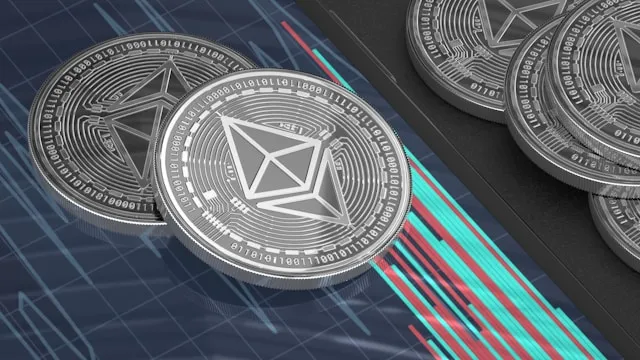
When people talk about cryptocurrency, Ethereum (ETH) is almost always part of the conversation. It’s the second-largest cryptocurrency after Bitcoin, and for many, it represents the future of decentralized technology. But what exactly drives Ethereum’s price? Why does it fluctuate so much? And most importantly, should you care about it if you’re not a hardcore crypto trader?
Think of Ethereum as the “engine” that powers thousands of apps in the crypto space. Its price isn’t just about speculation—it’s about demand for this engine. In this article, we’ll dive deep into Ethereum’s price, what influences it, and what you should know whether you’re a curious beginner, an investor, or simply someone who has heard “ETH” thrown around and wants clarity.
1. What is Ethereum?
Ethereum is a blockchain platform that lets developers build decentralized applications (dApps). Unlike Bitcoin, which is mainly seen as “digital gold,” Ethereum is like a giant app store without a central company running it.
At the core of Ethereum is Ether (ETH), its cryptocurrency. ETH isn’t just digital money; it’s the “fuel” that powers the network. Every transaction, every smart contract, and every application on Ethereum uses ETH.
2. A Brief History of Ethereum
Ethereum was launched in 2015 by Vitalik Buterin, a young programmer who saw Bitcoin’s limitations. He wanted a blockchain that could do more than just record transactions—something programmable.
Since then, Ethereum has gone from a niche experiment to one of the most important platforms in the world. Its price has soared, crashed, and soared again, mirroring its growing influence.
3. How Ethereum Differs from Bitcoin
Bitcoin is like digital gold—scarce, valuable, but with limited use beyond storing value. Ethereum, on the other hand, is more like a computer network that can run programs.
Bitcoin: Store of value, peer-to-peer money.
Ethereum: A platform for decentralized apps and smart contracts.
This difference is why Ethereum has such unique price drivers compared to Bitcoin.
4. Why Does Ethereum Have Value?
Ethereum has value because:
It powers dApps and smart contracts.
It is used in DeFi (Decentralized Finance) applications.
It’s the backbone of NFT (Non-Fungible Token) marketplaces.
Investors see it as an asset with potential growth.
Think of ETH as “digital fuel”—just as your car can’t run without gas, Ethereum apps can’t run without ETH.
5. Factors That Influence Ethereum’s Price
Several things affect ETH’s price, including:
Supply and demand: More use = higher demand.
Investor sentiment: Market hype drives price.
Global economy: Interest rates, regulations, and inflation.
Competition: Other blockchains like Solana or Cardano.
6. Ethereum Price Volatility Explained
If you’ve ever checked ETH’s price, you know it moves—sometimes a lot. This is because crypto markets are still young and speculative.
Volatility can be scary, but it’s also why many traders are drawn to Ethereum—it offers opportunities for big gains (and, of course, big risks).
7. Ethereum and Smart Contracts
Smart contracts are self-executing agreements written directly into code. Ethereum pioneered this idea, and it’s why so many developers flock to its network.
When demand for smart contracts increases, so does demand for ETH—pushing the price higher.
8. Ethereum 2.0 and the Move to Proof of Stake
Ethereum recently transitioned from Proof of Work (mining) to Proof of Stake (staking). This upgrade makes Ethereum:
More energy efficient.
Faster and cheaper to use.
More secure.
This shift was a game-changer, influencing ETH’s long-term value.
9. Ethereum’s Role in DeFi (Decentralized Finance)
DeFi apps let people borrow, lend, and earn interest without banks. Ethereum is the foundation of DeFi. Most DeFi apps run on Ethereum, and users need ETH to interact with them.
The bigger DeFi grows, the more valuable Ethereum becomes.
10. Ethereum and NFTs: A Price Driver
Remember the NFT boom? Digital art selling for millions? Almost all of it happened on Ethereum.
While the NFT hype cooled down, it showed the world Ethereum’s potential. Whenever NFTs rise in popularity again, ETH demand often spikes.
11. Global Events and Their Impact on ETH
Ethereum isn’t isolated—it reacts to world events:
Regulations: Governments cracking down can push prices down.
Economy: Inflation often drives people to crypto.
Tech news: Upgrades or hacks affect confidence.
12. Is Ethereum a Good Investment?
Here’s the million-dollar question: Should you invest?
Ethereum has shown resilience and innovation. Many experts believe it has long-term potential. But like any investment, it carries risks. The best approach? Invest only what you can afford to lose.
13. Risks of Investing in Ethereum
Risks include:
Volatility: Prices can crash quickly.
Competition: Other blockchains may overtake Ethereum.
Regulations: Governments may restrict crypto.
Always weigh these risks before investing.
14. Comparing Ethereum with Other Altcoins
Ethereum vs others:
Ethereum vs Solana: Solana is faster, but Ethereum is more secure and trusted.
Ethereum vs Cardano: Cardano is focused on research; Ethereum has first-mover advantage.
Ethereum vs Binance Smart Chain: BSC is cheaper, but less decentralized.
15. The Future of Ethereum Price
Many believe Ethereum could play a massive role in the future of the internet, known as Web3.
Predictions vary, but one thing is clear: if Ethereum continues to be the “engine” for dApps, DeFi, and NFTs, its price could keep rising in the long run.
16. Conclusion
Ethereum isn’t just a cryptocurrency—it’s a technological revolution. Its price reflects more than market hype; it reflects real-world use.
For everyday people, Ethereum represents both an investment opportunity and a glimpse into the future of money and the internet. Whether you choose to invest or simply observe, understanding Ethereum’s price gives you insight into where the digital world is headed.
FAQs
1. Why does Ethereum’s price change so much?
Because of supply, demand, speculation, and global economic events.
2. Can Ethereum reach Bitcoin’s price level?
It’s possible but unlikely in the short term since Bitcoin is seen as “digital gold.”
3. Is Ethereum safer than Bitcoin?
Both have risks. Ethereum has more use cases, while Bitcoin is simpler and more secure.
4. Can I buy a fraction of Ethereum?
Yes! You don’t need to buy a full ETH. You can own even a tiny fraction.
5. What’s the difference between ETH and Ethereum?
Ethereum is the network, and ETH is the cryptocurrency used within it.
For more visit The Crypto Bit